
It’s not a classic, and it definitely fumbles the ball in the final stretch, but it’s nowhere near the disaster I once claimed it was.
This review is part of my Second Chance Review series—where I revisit films I reviewed years ago and see whether time, perspective, and experience have changed my opinion. Fair warning: there may be spoilers.
For my very first Second Chance Review, I decided to take another look at Paul W.S. Anderson’s 1997 sci-fi horror film Event Horizon, starring Laurence Fishburne and Sam Neill, with supporting performances from Kathleen Quinlan and Joely Richardson. This was one of the films that really kicked off my long-standing love/hate relationship with Anderson’s work, which later included Mortal Kombat, Soldier, Resident Evil, and Alien vs. Predator. The script was written by Philip Eisner, a writer with a surprisingly small filmography considering the cult reputation this movie has developed over the years.
When I originally reviewed Event Horizon back in 1998, I was not kind. I joked that instead of the tagline “Infinite Space, Infinite Terror,” the film should have gone with “Infinite Running Time, Infinite Boredom.” I gave it a brutal one star out of five, calling it a messy, dull experience. I praised Fishburne’s performance but dismissed it as yet another generic hard-ass starship commander. I criticized Sam Neill for being “smirky,” said his character inspired no emotional investment, and labeled the special effects wildly inconsistent.
Nineteen years later, I can safely say: my opinion has changed. Dramatically.
First and foremost, I no longer think Event Horizon boring in the slightest. In fact, for most of its runtime, I found it genuinely gripping. The film does a solid job setting up its premise, introducing the crew, and establishing the eerie situation aboard the titular ship. Watching it now, I wasn’t bored at any point — something I definitely couldn’t say back then.
Laurence Fishburne’s performance stands out even more now. His captain isn’t just barking orders; he’s measured, calm, and trying desperately to maintain control as everything unravels around him. Of all the actors, Fishburne feels the most invested in his role, grounding the film even when it veers into the abstract and horrific.
As for Sam Neill, I honestly don’t know what I was talking about with the “smirky” comment all those years ago. Watching the film now, that criticism feels completely off-base. The real issue with his character, Dr. Weir, lies in the script, not the performance. His transformation from haunted scientist to full-blown embodiment of evil feels abrupt and underdeveloped. It’s hard not to suspect that scenes were cut or ideas left unexplored, because that transition simply doesn’t feel earned. Neill does what he can with the material, and I can’t fault him for that.
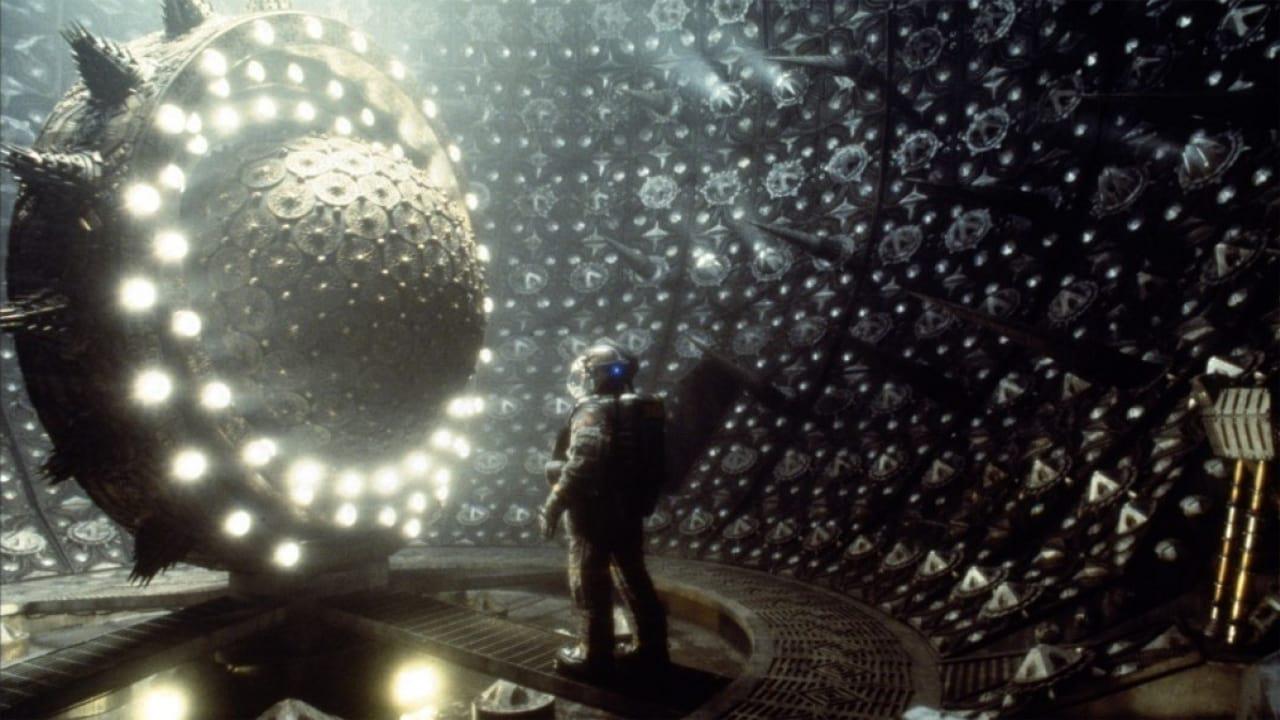
My original assessment of the special effects still mostly holds true. The CGI, particularly the zero-gravity sequences, has not aged well and clearly shows its early-era limitations. Some of the spaceship exterior shots look exactly like what they are: miniatures composited against backgrounds. That said, the practical effects and set design are a major strength. The Event Horizon itself—with its industrial, iron-age, almost medieval dungeon aesthetic—has a personality all its own. The ship feels ominous, alive, and threatening, and that atmosphere goes a long way toward selling the horror.
Where the film still stumbles is the ending. Ironically, despite my old complaint about the running time, I now think Event Horizon could have benefited from being a bit longer. The final act feels rushed, and Dr. Weir’s turn toward evil happens too quickly. About two-thirds of the way in, a switch flips, and the audience is asked to accept something that doesn’t quite go down smoothly. A little more character development—especially for Weir—could have made that climax far more effective.
Even so, Event Horizon is an effectively creepy film with a strong atmosphere, memorable visuals, and a tone that still works more often than it fails. It’s not a classic, and it definitely fumbles the ball in the final stretch, but it’s nowhere near the disaster I once claimed it was.
In light of this second viewing, I’m officially revising my score. I’m genuinely glad I gave it another shot, and I’d watch it again. I may not love it, but I definitely sold it short the first time around.
3.5 out of 5.0 stars

