
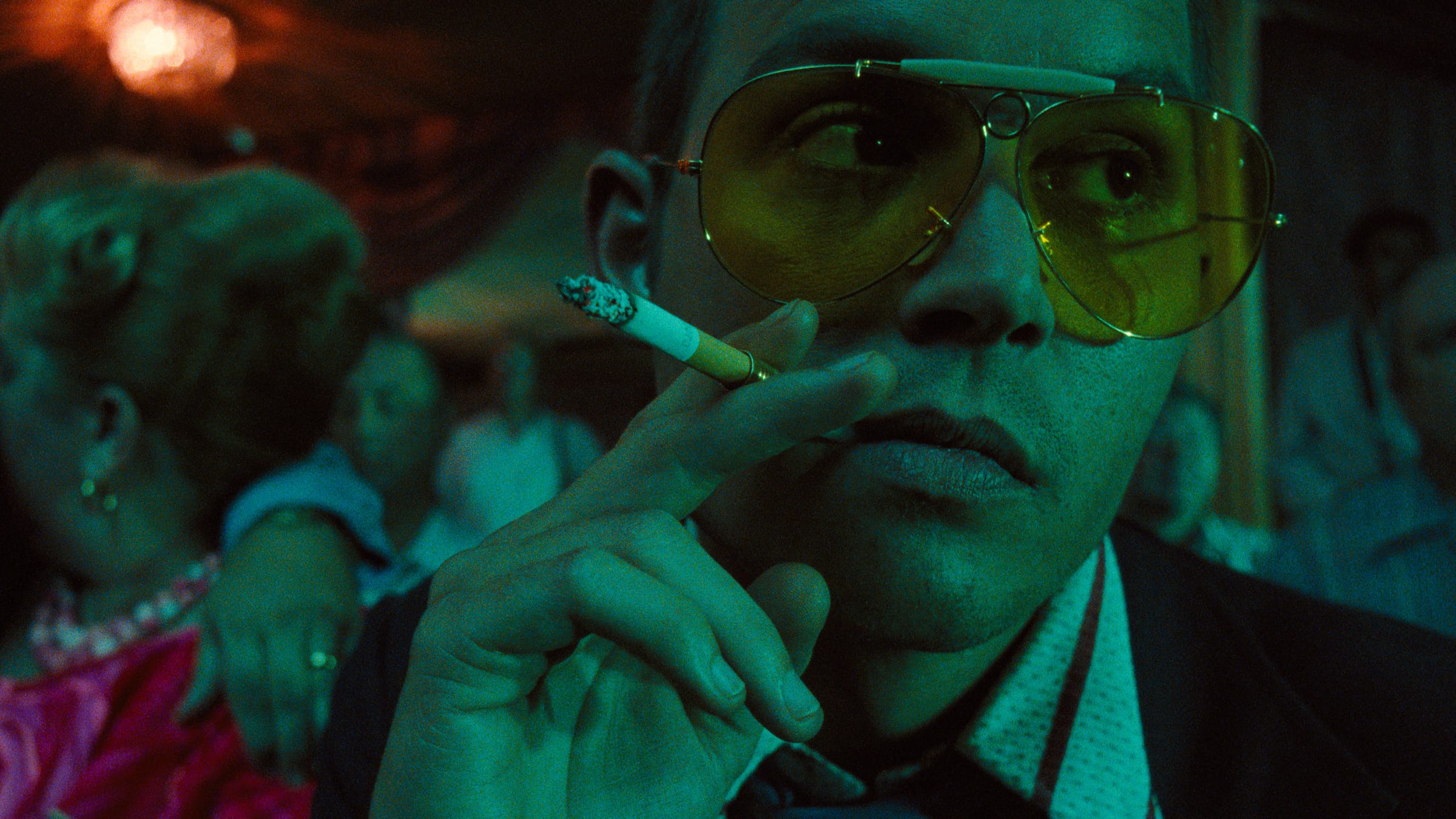
This might genuinely be the closest cinematic equivalent to an acid trip you can get without actually taking acid.
I saw Fear and Loathing in Las Vegas in theaters at the end of May 1998. I walked in with my girlfriend at the time, sat down expecting a coherent narrative with a clear arc and some kind of moral lesson…and walked out completely baffled. The movie went straight over my head.
The story follows Hunter S. Thompson’s alter ego, Raoul Duke (Johnny Depp), and his “attorney,” Dr. Gonzo (Benicio Del Toro) as they head to Las Vegas to cover a motorcycle race. They spiral into a prolonged, drug-fueled odyssey through casinos, hotel rooms, and the decaying remnants of the American Dream. Along the way, the film becomes a parade of strange encounters and cameos, all filtered through paranoia, hallucinations, and total excess.
In my original review, I called the film tedious and dull and gave it one star out of five. I said it devolved into chaotic run-ins with side characters, full of hysterics, vomiting, knives, and confusion. The only positive I singled out at the time was Johnny Depp’s performance.
Well… I was wrong.
Looking back, I realize the problem wasn’t the movie — it was me. In 1998, I didn’t have much exposure to films that weren’t literal or conventionally structured. I expected a beginning, middle, and end with a clean takeaway. This movie doesn’t operate that way. It’s experiential. It’s observational. It doesn’t tell you what to think. No, it drops you into the madness and lets you find your own meaning. And to be honest, at that point in my life, I had never even been high. Not once. Watching this film cold, without any frame of reference for altered perception or counterculture cynicism, I just saw chaos. Watching it again in 2026, it plays very differently.
What I completely missed the first time is that the deterioration into nightmare is the point. The film isn’t random. It’s a commentary on the death of the 1960s idealism and the hollow consumerism that replaced it. Las Vegas becomes a grotesque monument to excess and consumption. Duke observes it all with a mixture of disgust, fascination, and alienation. It’s less about drugs and more about disillusionment.
I can’t say I agree with everything Hunter S. Thompson ever believed as I’m not deeply versed in all his work but, as portrayed here, a surprising amount resonated with me in 2026. The skepticism. The feeling of watching a culture sell itself out. That hit harder this time.
Terry Gilliam was the perfect director for this material. His background with Monty Python and his flair for the surreal make the hallucinations feel tactile and immersive rather than gimmicky. The camera distorts, faces melt, carpets crawl and yet it all feels purposeful. The practical effects (including work by Rob Bottin) are fantastic. The nightmare imagery sticks with you. And the soundtrack? Incredible. The music amplifies the insanity and gives the film a strange rhythm that I didn’t appreciate before.
This might genuinely be the closest cinematic equivalent to an acid trip you can get without actually taking acid. If you go into Fear and Loathing in Las Vegas expecting convention, you’ll probably hate it — just like I did in 1998. If you approach it as an experience, as a satirical fever dream about America, excess, and disillusionment, it becomes something far more interesting.
4.0 out of 5.0 stars

