
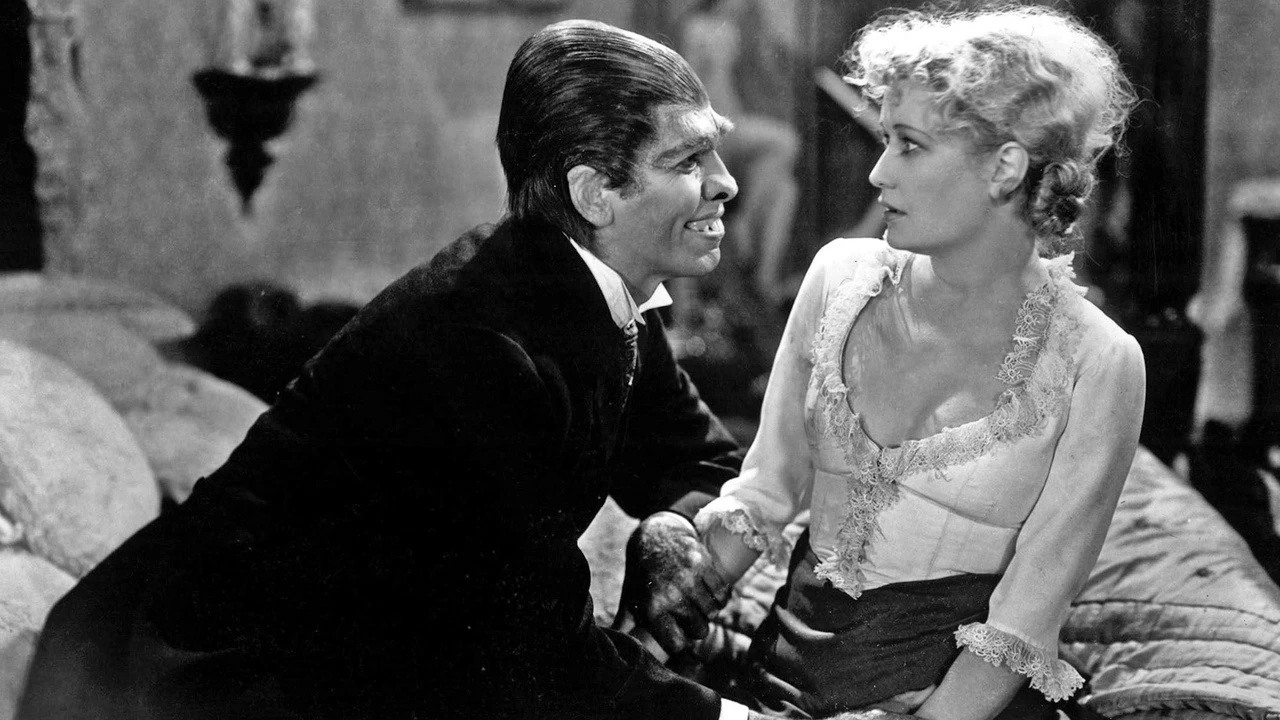
For something that’s often treated as “classic monster fare,” Dr. Jekyll and Mr. Hyde is far more complex and psychologically rich.
For this entry in my 2025 Halloween Fifteen, I went back to one of the true classics of horror cinema, 1931’s Dr. Jekyll and Mr. Hyde, directed by Rouben Mamoulian and starring the great Fredric March. Before even getting into the movie, I learned something right off the bat: the proper pronunciation of the doctor’s name is actually “Jee-kul,” not “Jeck-al,” as it’s commonly said. Apparently, that’s how Robert Louis Stevenson himself pronounced it — so, lesson learned before the film even started.
This version, restored on the Warner Archive Blu-ray, is a striking piece of early horror film-making. Mamoulian’s direction is unusually dynamic for the time, full of moving camera shots and clever point-of-view angles that keep the film visually alive. There’s a mirror sequence early on that must have been a technical nightmare to pull off in 1931. For a movie made almost a century ago, it’s surprisingly fluid and creative.
Fredric March plays both Dr. Henry Jekyll and his monstrous alter ego, Mr. Hyde. He does it so convincingly that I actually had to double-check to make sure it was really the same actor under all that makeup. His performance won him the Academy Award for Best Actor (shared in a tie that year), and it’s absolutely deserved. The transformation scenes are still impressive today, pulled off with clever lighting tricks and early photographic effects that predate Werewolf of London and The Wolf Man.
What really surprised me was how adult this film is. As a kid, I always thought of Dr. Jekyll and Mr. Hyde as just another old-school monster story, like Frankenstein or Dracula. Watching it now, though, it’s clear that this is not kid-friendly horror. The movie digs deep into themes of repression, morality, and sexual desire. Jekyll’s experiments are really about trying to separate his good and evil impulses. When he becomes Hyde, those repressed urges, particularly his libido, take over. Miriam Hopkins plays Ivy, a prostitute who becomes the focus of Hyde’s violent and lustful attention, and her scenes are shockingly risqué for 1931.
There’s also a strong undercurrent of domestic abuse and moral hypocrisy throughout the film. For something that’s often treated as “classic monster fare,” Dr. Jekyll and Mr. Hyde is far more complex and psychologically rich. It’s less about mad science and more about the darkness lurking in human nature.
Technically, the film is ahead of its time. The cinematography, the makeup, and the visual storytelling are all top-notch. Mamoulian keeps the camera moving in ways that wouldn’t become common until decades later. The restored footage adds to its impact, even if some of the once-controversial material seems tame by modern standards.
In the end, Dr. Jekyll and Mr. Hyde stands out not just as a cornerstone of horror history, but as a powerful morality tale about the duality of man. We’re all capable of good and evil and this film explores that terrifying truth with elegance and intensity.
4.0 out of 5.0 stars

