
While Saboteur doesn’t have the shocking twists or psychological depth of Hitchcock’s best-known masterpieces, it’s fast-paced, consistently entertaining, and full of that early-Hitchcock charm.
I went into Saboteur as a pretty casual Hitchcock viewer. Sure, I’ve seen the big ones—Psycho, The Birds, Rear Window—but beyond that, I’m still very much a novice. So diving into the Alfred Hitchcock Classics Collection 4K Ultra HD Blu-ray sets I recently picked up will be a fun way to fill in those gaps. Saboteur was the first of my selections.
Released in 1942 and filmed just weeks after Pearl Harbor, the movie taps directly into the wartime paranoia of its moment. America was on edge, worried about sabotage from German and Japanese agents, and Hitchcock wastes no time leaning into those fears. The story follows Barry Kane, played by Robert Cummings, a factory worker wrongly accused of destroying an airplane plant in Los Angeles. On the run and determined to clear his name, Barry tries to track down the true saboteur while dodging both the authorities and a shadowy network of enemy sympathizers he jokingly dubs “Murder Incorporated.”
As Barry travels across the country, he unexpectedly ends up with a partner: Pat Martin, played by Priscilla Lane. She begins the film convinced he’s guilty, but—this being a 1940s studio picture—starts to warm to him soon enough. While neither Cummings nor Lane went on to become major stars, they carry the movie surprisingly well. Their chemistry is likable, their dynamic is fun, and even the lightly sketched romantic angle feels charming in a quaint, old-Hollywood way.
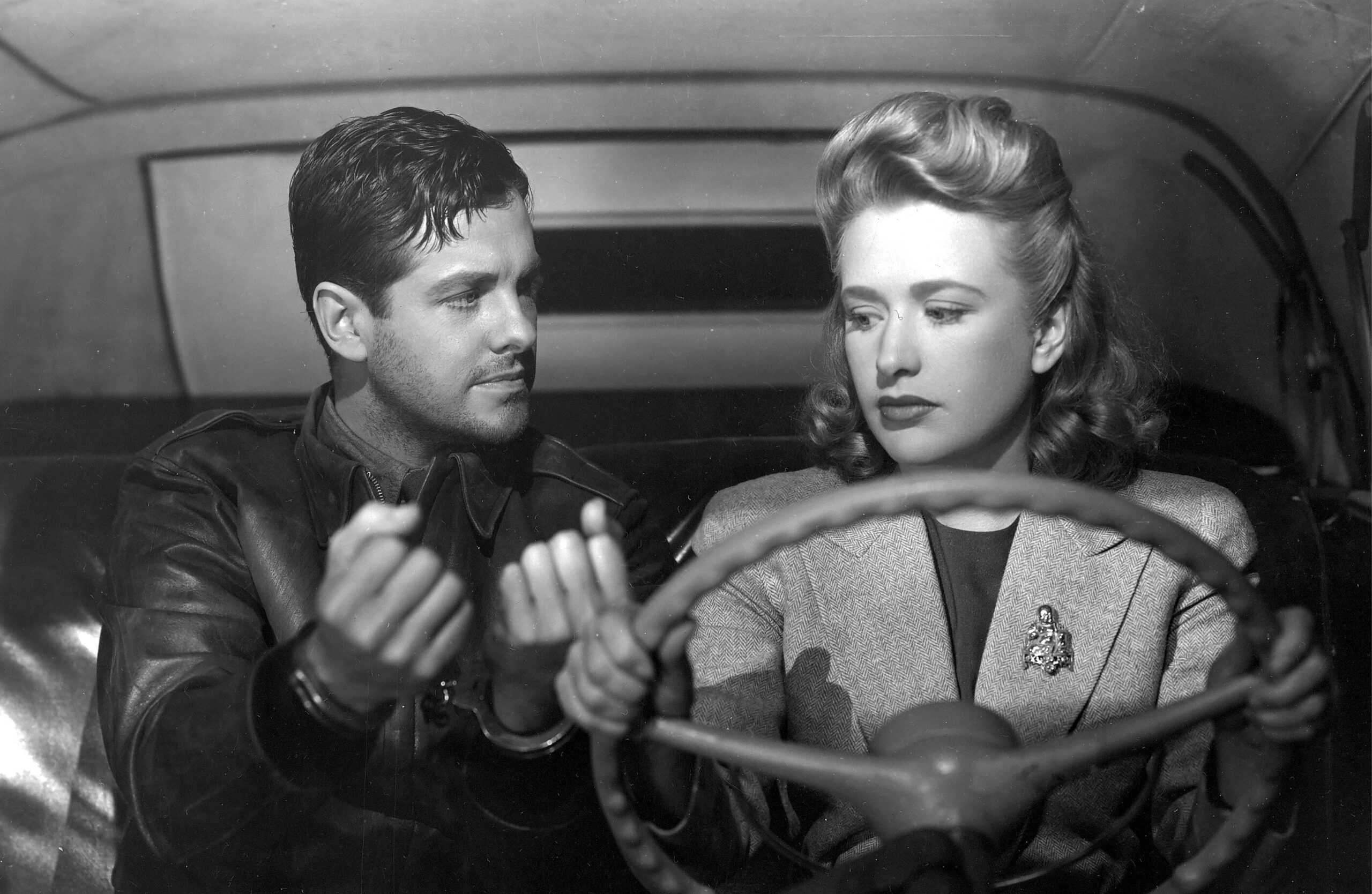
Hitchcock’s fingerprints are everywhere, even if Saboteur isn’t one of his most iconic works. There are several standout suspense sequences, including a terrific stretch involving a pair of handcuffs, a tense escape from a mansion filled with Nazi sympathizers, a chase through a movie theater, and of course the famous climax at the Statue of Liberty. (No spoiler there. The statue is plastered across nearly every piece of promotional art for the movie.)
What caught me off guard was the amount of visual effects work. Shot almost entirely in studio, the film relies on matte paintings, super-impositions, and composite shots—far more than you’d expect from a patriotic wartime thriller. Some are obvious by today’s standards, but they add a lot to the film’s visual personality.
The movie also has a heavy dose of wartime messaging. Characters give speeches that feel like straight-up propaganda, and the film treats pro-American sentiment as both moral and unquestionable. Watching it through a modern lens adds an interesting layer—how would these characters react to today’s political climate? Probably very differently. But even with its dated world view, the themes of infiltration, sabotage, and paranoia still feel oddly relevant.
While Saboteur doesn’t have the shocking twists or psychological depth of Hitchcock’s best-known masterpieces, it’s fast-paced, consistently entertaining, and full of that early-Hitchcock charm. Some viewers consider it an early step toward North by Northwest, and others compare it to The 39 Steps, but coming at it fresh and without those reference points, I still had a great time.
3.5 out of 5.0 stars

